
- 21/03/2026
- Dr. Vikas Pakhare
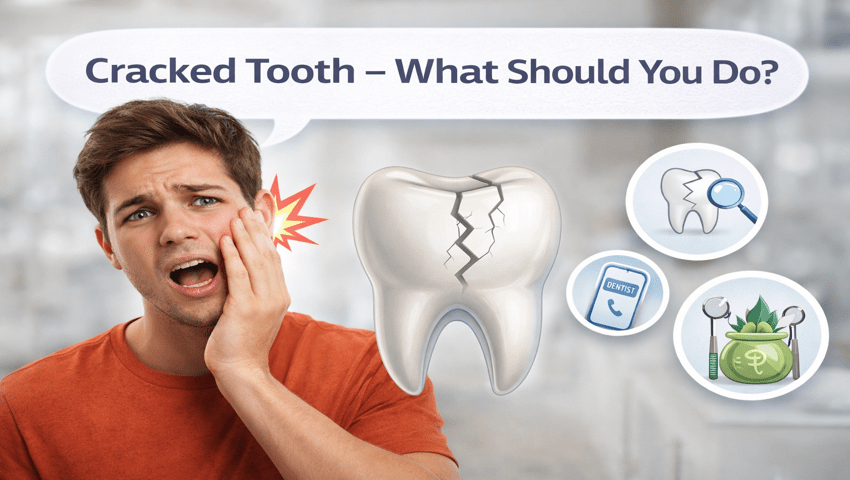
Cracked Tooth – What Should You Do?
A cracked tooth is a very common problem that I see in my dental practice almost every week. Many patients come to the clinic saying, “Doctor, I feel sharp pain while chewing, but otherwise I am fine.” In many of these cases, the reason is a cracked tooth. The important thing patients should understand is that a cracked tooth should never be ignored, because a small crack can slowly become a big problem and may even lead to root canal treatment or tooth removal if treatment is delayed. In this article, Dr Vikas Pakhare will explain in simple language what a cracked tooth is and what you should do if you think your tooth is cracked.
What Is a Cracked Tooth?
A cracked tooth means there is a small fracture line in the tooth. Sometimes the crack is visible, but many times it is not visible and can only be diagnosed during a dental checkup or X-ray. The tooth may look normal from outside, but when you chew food, the crack opens slightly and causes pain. That is why many patients feel pain while chewing but no pain otherwise.
Common Symptoms of a Cracked Tooth:
If you have a cracked tooth, you may notice the following symptoms:
- Pain while chewing food
- Sharp pain when you release the bite
- Sensitivity to cold or hot food
- Sensitivity to sweets
- Pain that comes and goes
- Swelling near the tooth
- Difficulty chewing on one side
- Feeling that something is stuck between teeth
One important sign of cracked tooth is pain while chewing and relief after stopping chewing. If you have these symptoms, you should visit a dentist as early as possible.
Why Do Teeth Crack?
There are many common reasons why teeth crack. Some of the most common causes I see in patients include:
- Biting hard food like ice, supari, bones, hard candy
- Teeth grinding at night
- Old large fillings
- Weak teeth due to cavities
- Opening packets or bottles with teeth
- Accident or injury
- Sudden hot and cold food together
- Age-related weakening of teeth
In our daily life, many people use teeth as tools, which is one of the main reasons for cracked teeth.
What Should You Do If You Think Your Tooth Is Cracked?
If you feel that your tooth may be cracked, you should follow these simple steps immediately:
- Avoid chewing from that side
- Avoid hard foods
- Avoid very hot and very cold foods
- Rinse mouth with warm salt water
- Keep your teeth clean
- Do not ignore the pain
- Visit a dentist as soon as possible
What Happens If You Ignore a Cracked Tooth?
Many patients ignore cracked tooth pain because it is not continuous. But ignoring a cracked tooth can lead to:
- Severe tooth pain
- Infection inside the tooth
- Swelling
- Root canal treatment
- Tooth fracture
- Tooth removal
- Implant or bridge treatment
So it is always better to treat the tooth early.
Treatment for Cracked Tooth:
Treatment depends on how deep the crack is. After examination and X-ray, the dentist will decide the treatment.
- Small Crack: If the crack is small, tooth-colored filling or bonding can repair the tooth.
- Medium Crack: If the crack is larger, a dental crown (cap) is placed to protect the tooth and prevent further cracking.
- Deep Crack: If the crack reaches the nerve, Root Canal Treatment followed by crown is required.
- Very Deep Crack: If the tooth cannot be saved, tooth extraction and dental implant or bridge may be required.
When Should You Visit a Dentist?
You should visit a dentist immediately if you have:
- Pain while chewing
- Tooth sensitivity
- Broken tooth
- Swelling in gums
- Pain while eating sweets
- Pain on one side of mouth
- Visible crack in tooth
Early diagnosis can save your tooth and prevent major treatment.
Visit Goodfaith Healthcare, Hinjewadi:
If you are suffering from tooth pain, cracked tooth, sensitivity, broken tooth, or any dental problem, you should get your dental checkup done as early as possible. We recommend that patients do not ignore dental pain and get proper dental examination.
A cracked tooth may start as a small problem, but if ignored, it can become a serious dental issue. If you feel pain while chewing or sensitivity in one tooth, do not ignore it. Early treatment can save your tooth, reduce pain, and avoid expensive treatments later. Take care of your teeth, and visit your dentist regularly for dental checkups.